

For divers who dream of crystal-clear water, vibrant coral reefs, and easy access to world-class sites, Grand Cayman delivers on every level. Whether you’re newly certified or a seasoned diver with hundreds of logged dives, our beautiful island in the western Caribbean offers the kind of underwater experiences that keep people coming back year after year.
If you’re asking yourself, “Should I dive in Grand Cayman?”, this guide will help you answer with a confident yes. We’ll explore what makes Grand Cayman an incredible dive destination, from its unique underwater geography to its rich marine life and variety of diving styles.
At Red Sail Sports, we’re the leader for Grand Cayman scuba diving trips. With our decades of expertise and local knowledge, we’re perfectly placed to showcase what makes Grand Cayman an ideal destination for scuba diving enthusiasts. Scroll down to get started — and please just contact us if you have any questions.
What Makes Grand Cayman Uniquely Exceptional for Scuba Divers?
While there are many great places to dive across the Caribbean and beyond, diving in Grand Cayman stands out for a few key reasons.
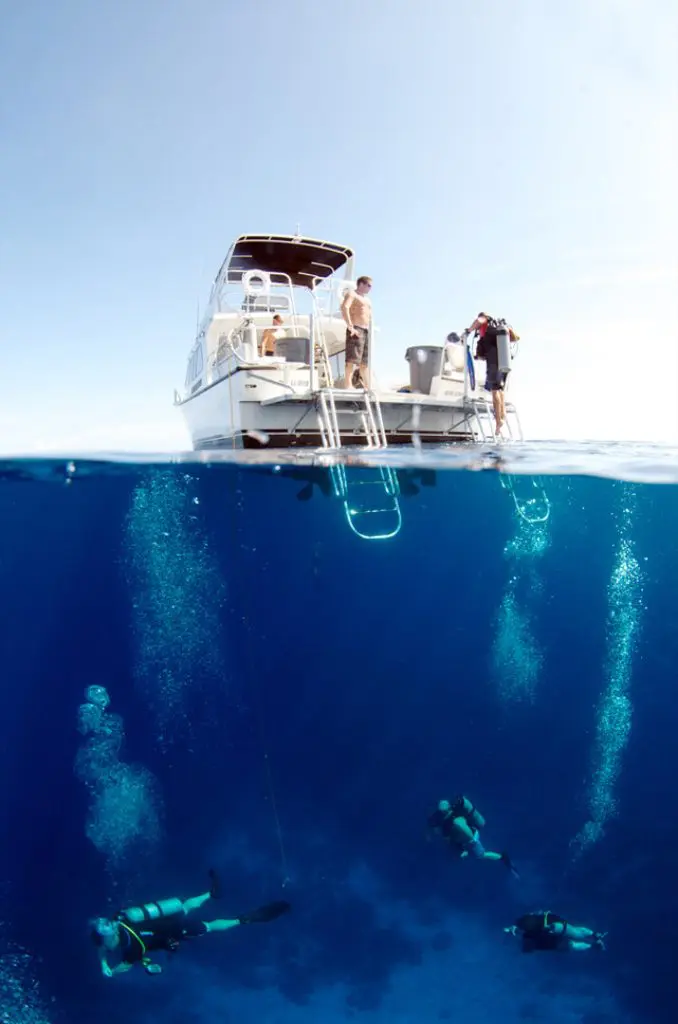
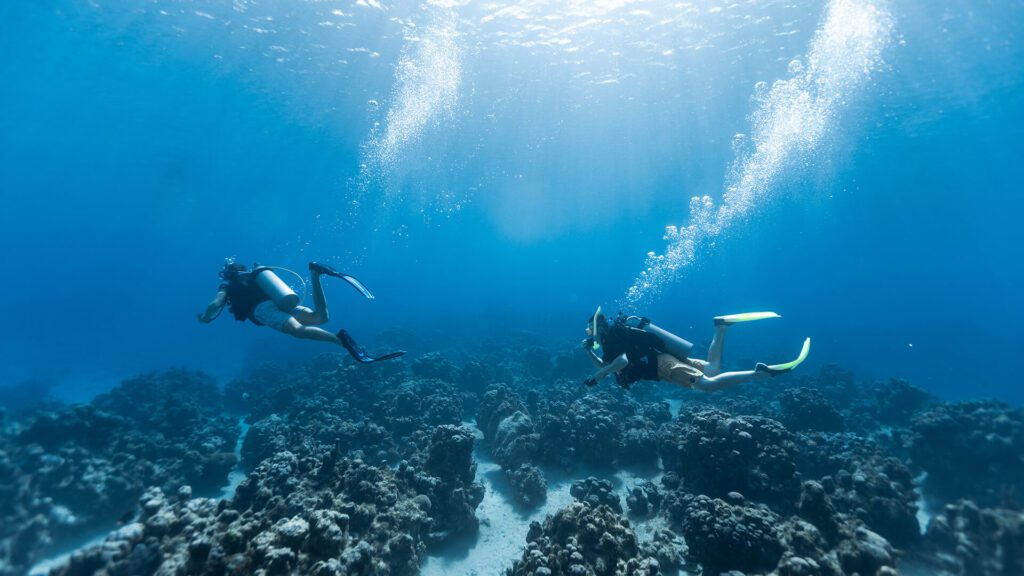
First, the water conditions are remarkably consistent. Expect warm temperatures (typically between 26 to 29°C or 79°F to 84°F) and excellent visibility that often exceeds 30 metres. With minimal current and calm seas for much of the year, divers of all experience levels can enjoy relaxed, rewarding dives.
Second, all three of the Cayman Islands share over 365 named dive sites — one for every day of the year — of which around 240 are in the water surrounding Grand Cayman. Many are just a short boat ride from shore, meaning you can explore dramatic walls, coral gardens, and shipwrecks without spending hours in transit.
The island’s geology plays a huge role in this. A steep underwater drop-off known as the Cayman Trench lies to the south/southeast of our island and helps to create stunning wall dives that start in relatively shallow water before plunging into the deep. This makes it possible to experience advanced underwater topography without needing tech gear or extreme depths.
Combined with strong conservation efforts and established marine parks, not to mention a whole host of incredible sites accessible directly from the shore, Grand Cayman diving is not only varied and accessible — it’s sustainable too.
If you’re wondering when to plan your trip to our part of paradise, don’t miss our blog What Time of Year is it Best to Visit Grand Cayman?
Grand Cayman’s Key Dive Zones: Depth, Character, and Challenge
Grand Cayman has multiple distinct dive zones, each offering something different for divers in terms of environment, depth, and marine encounters. Let’s take a look at the best of these zones and what you can expect when diving them.
Grand Cayman’s West Side
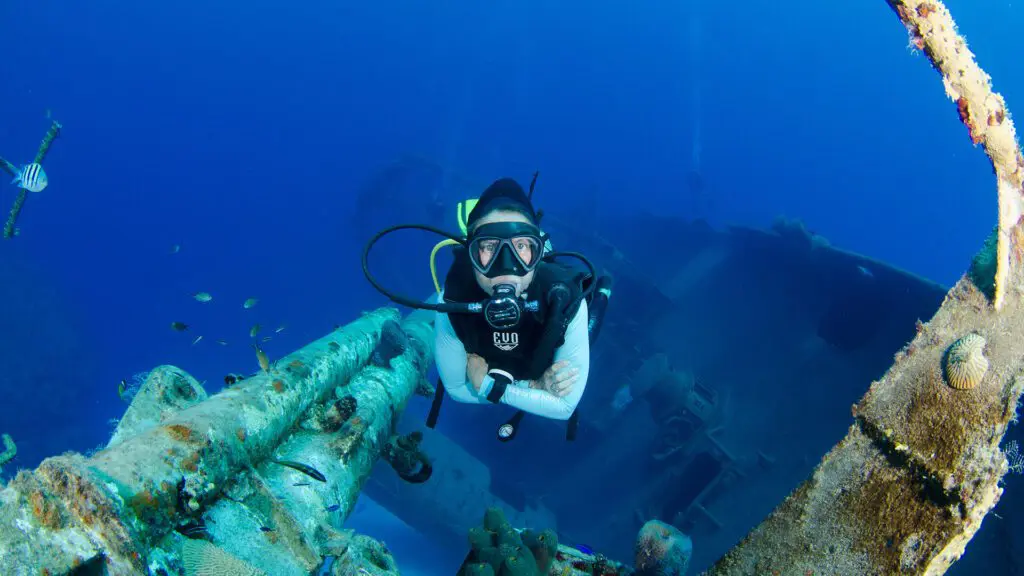
This area is the most popular for visitors and home to some of the island’s most photographed sites. The famous USS Kittiwake wreck rests in 18 metres of water and is ideal for wreck exploration and underwater photography. Other west-side favourites include Trinity Caves, with its maze-like swim-throughs, and Oro Verde, a scattered wreck surrounded by reef fish.
The West Side has a great combination of shallow reefs and deep wall dives, with some of the latter reaching depths of 100ft. The shallower water is especially well-suited to beginners or those seeking leisurely two-tank mornings close to Seven Mile Beach. Read all about our two-tank Kittiwake Wreck Dive in Grand Cayman and find out why it’s one of our most popular experiences.
Grand Cayman’s North Wall
Here’s where Grand Cayman really shows off its geological uniqueness. The North Wall begins just beyond the fringing reef and plunges steeply, giving you that vertigo-inducing feeling of floating above a vast underwater cliff. Sites like Tarpon Alley (depth of 15 to 25 meters) and Hammerhead Hill (depth of around 50 feet) are known for pelagic sightings and deep-water species. The wall also features overhangs, tunnels, and crevices that shelter everything from groupers to green turtles.
This area tends to suit intermediate to advanced divers, depending on depth and conditions. Don’t miss our Ultimate Guide to Diving in the Cayman Islands to find out even more about the best dive sites around our island, as well as our local tips and insights to help you make the most of your time here.
Grand Cayman’s East End
Less visited and more rugged, the East End offers a completely different atmosphere. Dives here often feel more remote, with expansive reef systems, large coral formations, and consistent encounters with rays, reef sharks, and dazzling schools of fish. And because sites here have been visited less over the years, they are incredibly well preserved.
Red Sail Sports’ sister company in the East End, Tortuga Divers, is a great base for accessing popular sites like Babylon — a premier wall dive starting at 45ft and featuring giant sponges and whip corals — and Julie’s Wall, another amazing wall dive starting at 55ft which is loaded with black sponge outcroppings.
This side of the island gives experienced divers a chance to enjoy less-crowded sites with plenty of marine action.
Dive Types and Styles in Grand Cayman
What makes Grand Cayman an incredible dive destination is not just the number of sites, but the range of experiences they offer. Whether you like wrecks, walls, or reefs, there’s plenty of variety packed into one island.
Wall diving is our island’s signature style. Imagine descending along a sheer face covered in colourful coral and sponges, with the deep blue falling away beside you. You don’t have to go deep to get the thrill — many of the walls start at 15 metres. If you’re specifically interested in exploring reefs, our Guide to Coral Reef Diving in the Cayman Islands is a must-read.
Wreck diving is another major draw, with the Kittiwake leading the charge. Purposefully sunk and well-maintained, it’s accessible yet fascinating, with compartments to explore and marine life long settled in. Read our Guide to Shipwreck Dives in the Cayman Islands to find out more about this fascinating, thrilling type of diving.
Shore diving is available too, particularly around George Town. It’s a good option for independent divers or those looking to squeeze in a quick dive without a boat. Sites like Devil’s Grotto and Eden Rock are just steps from the beach and offer surprisingly impressive reef formations.
Night diving adds another dimension to the underwater world. Coral polyps open, bioluminescence sparkles, and nocturnal creatures like octopuses and lobsters emerge. Red Sail Sports offers guided night dives that are perfect for spotting a different side of the reef.
Tempted? Discover more about our one-tank Grand Cayman Night Dive!

Grand Cayman Marine Life Seasonality
Diving in Grand Cayman is a year-round activity, but certain times of year bring particular highlights. You’ll see hawksbill and green turtles, barracuda, stingrays, and parrotfish throughout the year. From December to April, the water is slightly cooler and visibility can be even better, making it peak season for spotting spotted eagle rays and larger pelagics like reef sharks.
In the summer months, calmer seas allow for access to more remote sites, especially off the south and east coasts. This is also a great time for underwater photographers, as sunlight penetrates deep and water movement is minimal. Occasional sightings of hammerheads, manta rays, and even whale sharks add an element of surprise for those lucky enough to be in the right place at the right time.
Ready to learn more? Read our picks for 10 aquatic animals you’ll encounter in Grand Cayman when you have finished here!

Book Your Grand Cayman Dive Trips with Red Sail Sports
So, should you dive in Grand Cayman? If you’re after variety, convenience, and high-quality sites that suit every level of diver, the answer is a definite yes. Our island’s warm waters, vibrant marine ecosystems, and diverse underwater landscapes explain why Grand Cayman is the ideal destination for scuba diving enthusiasts.
At Red Sail Sports, our range of Grand Cayman scuba diving trips is your gateway to exploring the wonders of our underwater world. Browse our experiences and see which ones get your imagination racing. And if you have any pre-booking questions, please don’t hesitate to get in touch for the answers you need.